

Karen Kissinger Coaching – walking meditation can feel almost suspiciously simple when sitting meditation has always meant five restless minutes wondering when you can move again. In my years working with mind-body practices, I’ve found that some people settle more naturally when their feet have something to do. The rhythm of stepping gives attention a physical home: pressure under the heel, shifting weight, moving air, breathing, and the next patch of ground. Instead of treating movement as a distraction from mindfulness, walking lets movement become the practice.
⚡ Quick Answer
Walking meditation combines gentle physical movement with mindful attention to your steps, breathing, body sensations, and surroundings. A beginner can practice for just 10 minutes, a duration recommended in UC Berkeley’s walking meditation exercise. The goal is not to empty your mind, but to notice when attention wanders and calmly return to walking.
What Is the Walking Meditation Method?
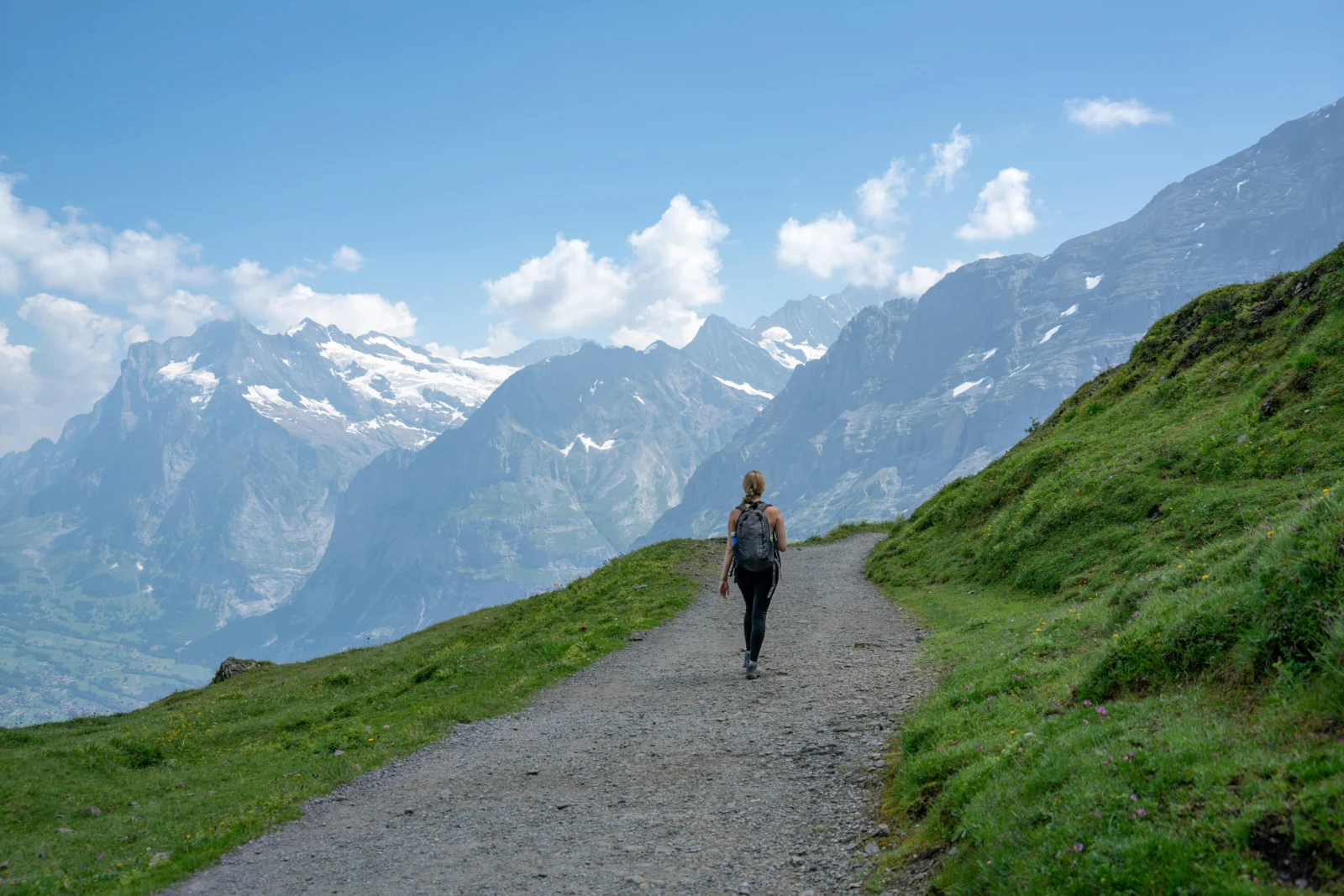
Walking meditation is a mindfulness practice in which you deliberately pay attention to the physical experience of walking.
That sounds easy until you try it. Most of us walk while planning dinner, replaying a conversation, checking directions, or mentally writing tomorrow’s to-do list. In walking meditation, the destination becomes secondary. Your job is to notice what is happening while you move.
The Greater Good Science Center at UC Berkeley teaches a formal version using a quiet path of roughly 10–15 paces, or about 20–40 feet. You walk slowly, pause, turn, and repeat while noticing individual parts of each step. Berkeley suggests starting with about 10 minutes a day.
A simple place to begin is with four sensations:
- the foot lifting from the ground
- the leg moving forward
- the heel or foot making contact
- your weight shifting onto that leg
You do not have to control your breathing or force yourself into a peaceful mood. Notice what is already there.
This is where mindfulness and meditation practices become much more practical. Attention wanders; you notice; you return. That return is the practice.
I remember doing slow mindful walking after a day when sitting felt nearly impossible. My shoulders were tight, my thoughts kept jumping, and forcing myself onto a cushion only made me more irritated. Outside, I began noticing the tiny roll from heel to forefoot and the temperature of the air against my hands. Nothing dramatic happened, but after several passes I realized I was no longer arguing with my own restlessness. I was finally working with it.
💡 Key Takeaway: Walking meditation is not regular walking performed more slowly. Its defining feature is deliberately returning your attention to the lived experience of each step.
Why Walking Meditation Can Work Better When Sitting Still Feels Impossible
For some restless meditators, movement gives attention a clearer target than stillness.
That does not mean walking meditation is universally better than seated meditation. It means the best starting practice may depend on how you respond to stillness.
If sitting makes you spend ten minutes battling the urge to move, a mind-body movement practice may be a friendlier doorway into present-moment awareness. Walking gives your mind several concrete sensations to follow: feet contacting the ground, muscles changing tension, arms swinging, breath moving, and sounds appearing and fading.
UC Berkeley’s Greater Good program notes that walking meditation directs attention toward both internal sensations and the surrounding environment. Its instructions also acknowledge something experienced practitioners recognize quickly: very slow formal walking can initially feel awkward.
What nobody tells you is that feeling awkward does not mean you are doing it badly. In fact, slowing down can expose just how uncomfortable we have become with doing one thing at a time.
If you already enjoy Tai Chi or other gentle mind-body exercises, that idea may feel familiar. Movement does not have to compete with awareness. Movement can carry awareness.
For another movement-based approach, explore qigong-inspired mindful movement, which often pairs slow movements with relaxed awareness. It is not identical to walking meditation, but it offers another option if staying physically engaged helps you practice presence.
How Does Walking Meditation Combine Exercise and Mindfulness?
Walking meditation brings together two activities that people often separate: moving the body and training attention.
Mindfulness is the practice of paying deliberate, nonjudgmental attention to present experience.
The walking side is physical. Your muscles contract, joints move, weight shifts, and your cardiovascular effort changes according to your pace. The mindfulness side is attentional. Rather than moving on autopilot, you notice those sensations as they occur.
The pace matters when talking about exercise benefits. A traditional, very slow walking meditation may involve too little physical effort to count as moderate-intensity aerobic exercise. By contrast, the CDC identifies brisk walking at about 2.5 miles per hour or faster as an example of moderate-intensity activity.
That distinction is useful because walking meditation does not have to serve every purpose at once. You might spend five minutes walking very slowly to settle your attention, then continue with a quicker daily walk for active living while keeping some awareness on your breathing, posture, and surroundings.
According to the CDC, adults are generally advised to get at least 150 minutes of moderate-intensity physical activity each week, and brisk walking is one way to accumulate those minutes. The CDC also reports that physical activity can have immediate benefits such as reduced feelings of anxiety.
That does not mean ten minutes of slow meditation replaces a complete fitness plan. Think of mindful walking as a bridge between gentle daily movement and mental presence rather than a substitute for every form of exercise.
Walking meditation can fit into a broader approach to managing energy throughout the day. Instead of making every break another productivity challenge, use a few mindful steps to check whether you need movement, quieter surroundings, food, hydration, or rest.
What Happens When You Bring Attention to Each Step, Breath, and Sensation?
The first thing you may notice is not calm. You may notice noise.
This gentle practice can also be a useful entry point into supporting focus and brain performance: rather than demanding uninterrupted concentration, you practice noticing distraction and returning to one clear sensory cue.
A song looping in your head. Tightness in one hip. Impatience. Traffic. Your urge to speed up. That is useful information because self-awareness begins with noticing what is present rather than demanding a different experience.
When attention drifts, choose one sensory anchor and return to it. Feel the sole of your foot. Listen to three sounds. Notice one full inhale and exhale. Then keep walking.
Harvard Health describes mindful walking in much the same way: move and breathe rhythmically while noticing bodily sensations, sights, smells, air against the skin, and the surface beneath your feet. A slower walk may support relaxation, while a more vigorous mindful walk shifts attention toward sensations such as faster breathing, heartbeat, and working muscles.
This is why building a consistent mindfulness habit matters more than chasing one perfectly peaceful session. Some walks will feel calm. Others will show you exactly how distracted you are. Both can be practice.
What Are the Benefits of Walking Meditation?
The biggest practical benefit may be accessibility: walking meditation turns an activity many people already do into a chance to practice attention.
As you practice, notice your day-to-day energy without judging it. A walk taken while tired may feel different from one taken after a refreshing break, and both observations can help you respond more thoughtfully to your needs.
UC Berkeley recommends a 10-minute walking meditation and cites research involving mindful walking programs in several populations. Its evidence summary includes studies reporting changes in psychological distress, negative emotion, mindfulness, and other outcomes, though the research settings and populations differ and should not be treated as proof that every person will experience the same results.
From a coaching standpoint, I see another advantage that is harder to capture in a laboratory: there is less friction between “meditation time” and ordinary life. You can practice awareness during a quiet morning walk, a work break, or a few deliberate passes through your backyard. That makes it easier to connect mindfulness with a broader stress-management routine instead of treating meditation as one more task you failed to fit into your day.
And for the person who has repeatedly concluded, “I’m just bad at meditation because I can’t sit still,” mindful walking offers a different lesson: presence does not require stillness.
Walking Meditation vs. Regular Walking: What Actually Changes?
The legs may be doing almost the same thing, but your attention is doing different work.
On an ordinary walk, the mind is often free to plan, rehearse conversations, listen to a podcast, or drift wherever it wants. During mindful walking, you deliberately return attention to present-moment sensations.
That distinction matters more than how slowly you move.
A 2019 randomized pilot study published in Complementary Therapies in Medicine tested a four-week mindful walking program in 38 adults who were not getting enough physical activity. The researchers described mindful walking specifically as a practice combining physical activity and mindfulness. Because this was a small pilot study, it is better viewed as promising evidence than proof of a guaranteed mental-health effect.
| Regular Walking | Walking Meditation |
|---|---|
| Main goal may be transportation, fitness, or recreation | Main goal includes deliberate present-moment awareness |
| Attention may wander without correction | Wandering is noticed and attention is gently returned |
| Pace often follows fitness goals or destination | Pace is chosen to support awareness |
| Music, podcasts, or phone calls may accompany the walk | External stimulation is usually reduced |
| Steps happen mostly automatically | Sensations of stepping become an attention anchor |
| Distance or speed may define success | Returning to awareness defines the practice |
Neither version is “better.” If you want cardiovascular conditioning, a brisk walk may make more sense. If you want to practice attention while moving, walking meditation changes the purpose of those same steps.
You can also combine them. Five minutes of slow walking meditation followed by a brisk, attentive walk can fit naturally into an active-living routine.
If you feel sluggish after hours indoors, a short outdoor walk may offer a gentle energy boost through a change of scenery and light movement. Treat that as a possible benefit, not a promised result or a reason to push through genuine exhaustion.
How to Practice Mindfulness When Walking
You do not need a retreat center, special shoes, or thirty quiet minutes.
This is also why quick habits that fit real life can be more sustainable than complicated rituals. A few attentive steps on a familiar route are enough to rehearse the core skill of returning.
Try this six-step version:
- Choose a safe, simple path. A quiet hallway, yard, or traffic-free path where you can walk about 10–15 paces works well.
- Stand still for three natural breaths. Feel the weight of your body through both feet before moving.
- Begin walking slightly slower than usual. Notice lifting, moving, placing, and shifting rather than trying to manufacture calm.
- Choose one main anchor. Stay primarily with your feet, breathing, or whole-body movement instead of trying to notice everything at once.
- Return when your mind wanders. Notice that thinking happened, then come back to the next physical step without criticizing yourself.
- Pause before turning around. Stop completely, notice one breath, turn with awareness, and continue.
The University of Utah’s walking meditation guidance similarly recommends a short 10–15-pace lane and paying attention to lifting the foot, moving it forward, placing it down, and shifting body weight.
If ten minutes feels too long, begin with three. A small practice you actually repeat is more useful than an ambitious routine you avoid. That same principle applies when building any sustainable wellness habit.
One practical way to make the routine stick is habit stacking: attach a minute of mindful stepping to something you already do, such as taking your morning tea, stepping outside after lunch, or walking from your desk to the door.
A Simple 10-Minute Walking Meditation for Beginners
For the first two minutes, simply notice your feet contacting the ground.
During minutes three through five, add awareness of breathing without trying to match the breath to your steps.
During minutes six through eight, widen your attention to your whole body: arms, shoulders, posture, temperature, and movement.
For the final two minutes, let sounds and sights enter awareness while keeping some attention in your feet.
If your thoughts wander fifty times, you have fifty opportunities to practice returning. That is not fifty failures.
After a walk, consider a moment of personal reflection: What did you notice first? Where did attention go? What helped you return? This is not a scorecard; it is a way to learn what supports your practice.
Where to Put Your Attention When Your Mind Wanders
Use the most obvious physical sensation available.
If you feel your heel touch the pavement, stay there. If breathing is easier to notice, follow one inhalation and exhalation. If you become overwhelmed by internal sensations, gently widen your attention to neutral surroundings such as trees, light, or sound.
People who find body-focused practices uncomfortable do not need to force intense inward attention. Mindfulness can be flexible, and a personalized mind-body approach should respect what helps you remain grounded.
What Are the Six Stages of Walking Meditation?
There is an important catch to this search question: there is no single universal six-stage system used by every walking meditation tradition.
Some Vipassana teaching systems gradually divide a single step into increasingly detailed movements. In one six-part method, the practitioner observes raising the heel, lifting the foot, moving it forward, lowering it, touching the ground, and pressing or transferring weight. Other teachers use simpler two-, three-, or four-part versions.
For most beginners, “lifting, moving, placing” is plenty. More detailed labeling is a concentration exercise, not a requirement for doing walking meditation correctly.
As you get comfortable with this technique, more walking meditation ideas can help you explore variations in pace, attention, and setting without losing the simple foundation of noticing each step.
That distinction matters because technique can become another source of tension. If remembering six labels makes you less aware of your body, simplify.
What Does Thich Nhat Hanh Say About Mindful Walking?
Zen teacher Thich Nhat Hanh taught walking meditation less as a mechanical exercise and more as a way of arriving fully in the present.
In the Plum Village teachings on walking meditation, practitioners are encouraged to become aware of the contact between the feet and the earth and to coordinate steps naturally with breathing. A person might take two or three steps while breathing in and three or four while breathing out, depending on their natural rhythm.
The part I find most useful is that the breath does not need to fit a rigid formula. Your lungs and walking rhythm decide the pattern.
Thich Nhat Hanh also taught phrases such as “I have arrived” and “I am home” as reminders to stop mentally rushing toward the next moment. His approach makes mindfulness less about perfect concentration and more about actually inhabiting the step you are taking.
Guided vs. Unguided Walking Meditation: Which Is Better for Beginners?
| What Matters | Guided Walking Meditation | Unguided Walking Meditation |
| First-session learning | Instructions tell you where to place attention | You must remember the method yourself |
| Mental effort | Lower at first because prompts structure practice | Slightly higher until the routine becomes familiar |
| Equipment | May require a phone and headphones | Nothing required |
| Outdoor awareness | Audio can compete with environmental sounds | Easier to hear traffic and surroundings |
| Flexibility | Timing follows the recording | You choose pace and duration |
| Dependence | Easy to rely on prompts repeatedly | Builds independent practice sooner |
| Best fit | First few sessions in a safe setting | Regular practice and outdoor mindful walks |
For the most common beginner situation, I would choose guided walking for the first few practices, especially if you have no idea what you are supposed to notice. A good recording removes the mental work of remembering instructions.
After that, unguided practice has the edge. You can walk at your own rhythm and become less dependent on someone telling you when to notice your feet or breathe.
The exception is anyone walking near traffic, cyclists, uneven trails, or crowded areas. In those settings, I would skip headphones entirely. Mindfulness should make you more aware of your environment, not less.
If guided practice helps you build consistency, it can also serve as a bridge toward a broader daily mindfulness routine.
Common Walking Meditation Mistakes That Make It Harder to Feel Calm
The first mistake is trying too hard to become calm.
Calm may happen, but it is not a performance target. The moment you start checking, “Am I relaxed yet?” you have created another task for the mind.
A mindful walk and a brief power nap serve different purposes: the walk practices attention while moving, whereas a nap prioritizes sleep and recovery. Choose according to how you feel and what your schedule safely allows.
A second mistake is walking so slowly that balance becomes uncomfortable. Slow enough to notice your steps is useful; exaggerated slowness is optional.
A third is treating thoughts as interruptions. Thoughts are part of what you notice. The practice is recognizing that attention drifted and returning without turning that ordinary moment into a problem.
A fourth is expecting every walk to feel peaceful. Some days mindfulness makes you more aware of irritation, fatigue, or tension before anything softens. Techniques such as breathing for stress relief can complement the practice, but you still do not need to force a particular emotional result.
On days when fatigue is the main issue, walking does not have to replace rest. Exploring short daytime naps may be more appropriate than forcing yourself into another activity; consider what your body is signaling instead of treating every low-energy moment the same way.
Honestly, this part surprises many beginners: a distracted walking meditation can still be a productive practice. Noticing distraction is awareness.
💡 Key Takeaway: Success in walking meditation is not reaching a perfectly quiet mind. It is repeatedly noticing where your attention went and returning to the experience of walking.
Frequently Asked Questions
What does Thich Nhat Hanh say about mindful walking?
Thich Nhat Hanh taught mindful walking as a way to arrive in the present with each step rather than mentally rushing toward the future. Plum Village instructions emphasize feeling the contact of the feet with the earth and allowing breathing and steps to coordinate naturally. You do not need to copy a rigid breathing count; comfort and awareness come first.
What are the six stages of walking meditation?
Okay so this one depends on the tradition. One detailed Vipassana method divides a step into six movements: raising the heel, lifting, moving, lowering, touching, and pressing. Other traditions teach fewer stages, so there is no universal rule that every walking meditator must follow six. Beginners can usually start more comfortably with “lifting, moving, placing.”
What is the walking meditation method?
Walking meditation means deliberately bringing attention to the physical experience of walking. Start on a safe path, slow down enough to feel each step, choose sensations in the feet or breath as an anchor, and gently return whenever attention wanders. A 10-minute practice is enough for a beginner to learn the pattern. You can later bring the same skill into normal walks.
How to practice mindfulness when walking?
Begin by feeling your feet make contact with the ground instead of trying to monitor everything around you. Notice lifting, moving, placing, and weight shifting for several steps. When thoughts pull you away, acknowledge them and return to the next step. Over time, widen awareness to breathing, posture, sounds, and surroundings.
Can walking meditation count as exercise?
Short answer: yes, but the intensity matters. Very slow formal meditation may provide movement without reaching moderate aerobic intensity, while brisk mindful walking can be both mindfulness practice and exercise. If fitness is part of your goal, keep the CDC’s physical activity recommendations in mind rather than assuming every meditative stroll replaces a workout.
Your Next Walk Can Be Your Meditation Practice
Do not wait for the perfect trail, quiet morning, or twenty uninterrupted minutes.
On your next ordinary walk, give yourself the first 10 steps without your phone. Feel one foot lift, move, and meet the ground. Then notice the next one.
If your mind races ahead, come back to your feet.
That return—not perfect calm—is the skill you are building.
If you practice regularly, a simple weekly review can reveal patterns you might otherwise miss. Think about which days felt easiest to practice, what interrupted your walks, and whether a shorter or more flexible routine would make next week easier.
If sitting meditation has always felt like wrestling with yourself, movement may be the doorway you were missing. Try it once without judging the result, and share what you notice from your own walking meditation practice.

Certified Health Coach (CHC) and Certified Wellness Coach (CWC) through the National Wellness Institute. Tai Chi and Qigong certified facilitator with 12 years of holistic health practice and nutrition coaching.

I always thought meditation meant sitting still, so this walking version honestly sounds way more doable for me 😄
Tried focusing on my feet during my morning walk today 👍 It was surprisingly hard not to start thinking about work.
Would this still work on a regular neighborhood walk, or is a short back-and-forth path better for beginners? 🤔
The tip about starting with just three minutes is perfect 😅 I usually make new habits way too complicated and then quit after a few days lol.
I like the idea of noticing lifting, moving, and placing instead of trying to force myself to feel calm 🙌
One thing that helps me is leaving my phone in my pocket for the first ten minutes. Otherwise I end up checking notifications without even thinking about it 😎 The walk feels a lot quieter when there is nothing buzzing every few steps.
I’ve been doing something kinda similar after dinner without knowing it had a name 😍 Paying attention to the air and my steps usually gets me out of that nonstop thinking mode.
The part about movement carrying awareness clicked for me 👌 I also liked the related piece on mind-body wellness because it connects the same idea to everyday exercise.
Does anyone find guided walking easier at first, or does the audio become another distraction? 😮
Gonna try the 10 minute version this weekend 🔥 The part where you widen attention to sounds and sights near the end seems like a nice way to finish.
I used to get annoyed whenever my thoughts wandered because I assumed that meant I was bad at meditation. The idea that every wandering thought is another chance to return changes the whole thing for me. It feels less like trying to be perfect and more like practicing a skill. Pretty useful tbh 😊
I came across a mindful walking study on PubMed that fits this topic pretty well. The researchers tested a four-week mindful walking program and found a greater reduction in perceived stress right after the intervention, although that difference did not remain significant at the one-month follow-up. It is a small pilot study, so I would not treat it as final proof, but it is interesting to see research pointing in the same direction as the practical advice here. 📚